
Understanding What's At Stake
In an age when we can conjure up the software we want, figuring out what's worth making becomes a critical skill to have. What lessons can we learn from innovations that changed the world?
For as long as I’ve been making software, I’ve been interested in stories of invention. What makes it possible for some people to accomplish a thing that seemed impossible? What’s the thing that unlocks the frame of mind needed to crack a hard problem? How do people notice something that others overlook? How do people come to understand what’s at stake in tackling a hard problem or inventing something new?
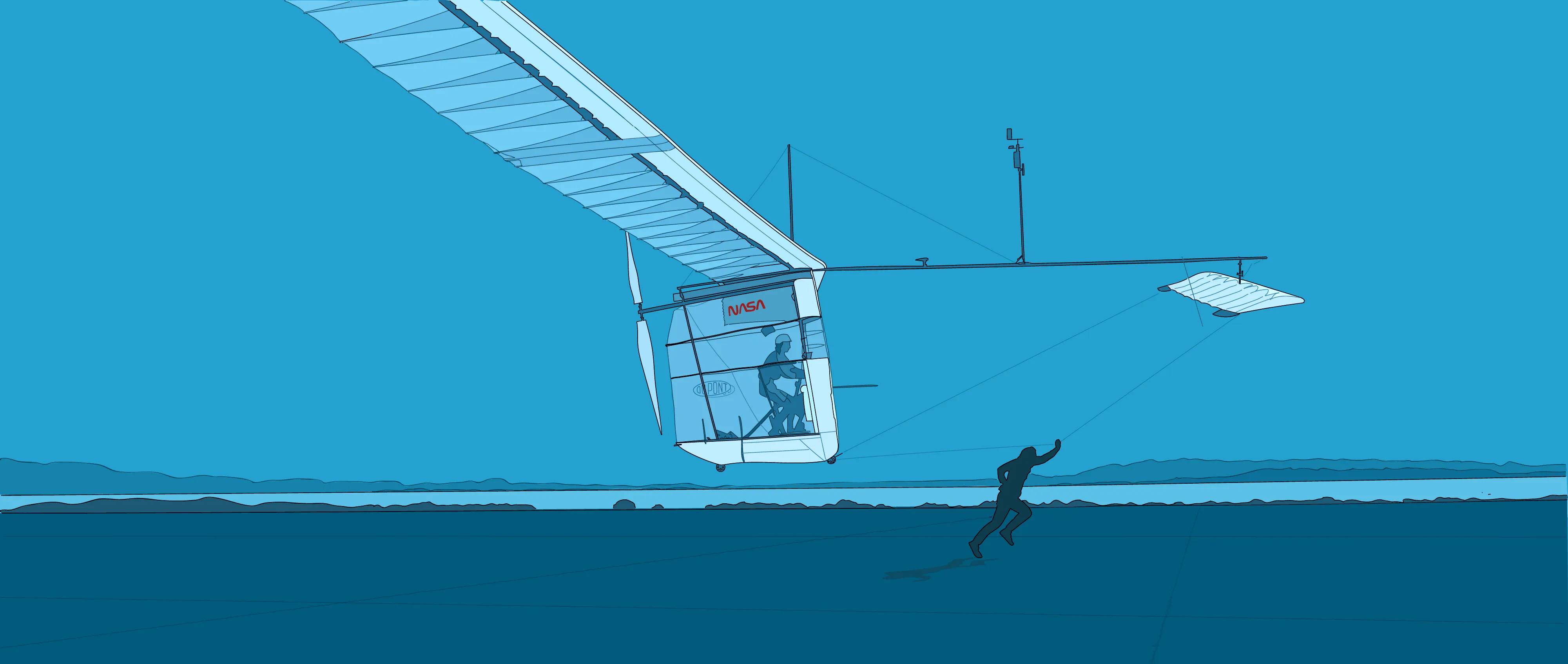
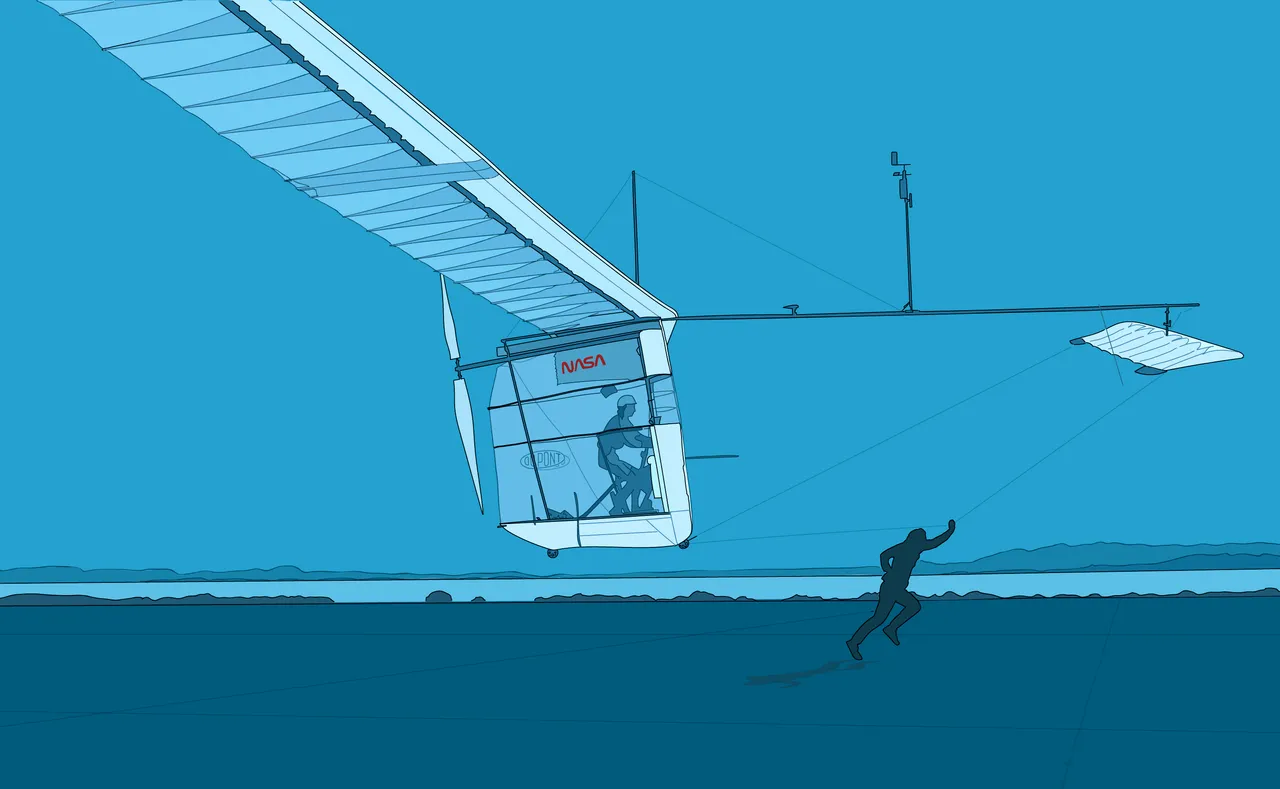
I started thinking about this after reading Aza Raskin’s evergreen “You Are Solving The Wrong Problem” published in 2011. Raskin describes how Paul MacCready, an aeronautical engineer with a talent for coming up with novel solutions, decided he’d try to win an 18-year-old prize for human powered flight back in 1977. To win the prize, a pilot would need to take off and fly a vehicle in a figure-eight path around two pylons a half mile apart. MacCready and his team were successful after six months of development, creating the Gossamer Condor:
Paul MacCready was successful because he found a way to reframe the problem of human powered flight into an economics of learning problem. By making a plane that was made of cheap materials and construction, the plane could be repaired and modified in hours rather than months or years.
MacCready went on to apply the lessons he learned from the Gossamer Condor to create a plane that could travel 22 miles across the English Channel less than two years later. Minor refinements to the original design, the use of composites, a propeller designed for cruising, and a tenacious pilot were the bulk of what was required to achieve a 22x improvement over the original design. Here’s the story of the Gossamer Albatross:
How did Paul MacCready accomplish this?
Matt Linderman’s How nature and naiveté helped Paul MacCready build a human-powered airplane in only six months offers background on how MacCready found a way to approach plane design from a fresh perspective, pulling from his own interests in model planes, hang gliding, human powered vehicles, and lessons from nature.
So much of the success of the Gossamer Condor and Albatross ultimately came down to MacCready’s understanding about what was at stake in meeting his goal. He saw it far more clearly than those who had tried before, and his way of seeing shaped the thing he engineered and designed. He was able to do something people had assumed was impossible, not with greater resources and expertise, but because he understood the most important problems to solve for and knew how to learn quickly and cheaply.
Here’s Paul MacCready’s account of how he found the problem of human powered flight and solved for it. It’s interesting how so much of his ability to invent comes from integrating an incredibly wide array of interests and knowledge while also having the good fortune of tackling the problem at the right time.
The faculty for cutting through to the most essential thing is what fascinates me about this story. It’s the prerequisite for being able to make things that change the world in some important way. Understanding what’s at stake is the essential ingredient that, if missing, likely means that the whole effort will fail.
While I think Paul MacCready’s story of invention is inspiring and extraordinary, I don’t think it’s unique. Once we start to think about invention and innovation as a byproduct of understanding what’s at stake, we can find examples all over the place.
What's-At-Stake Examples
Ground Effect in Formula One
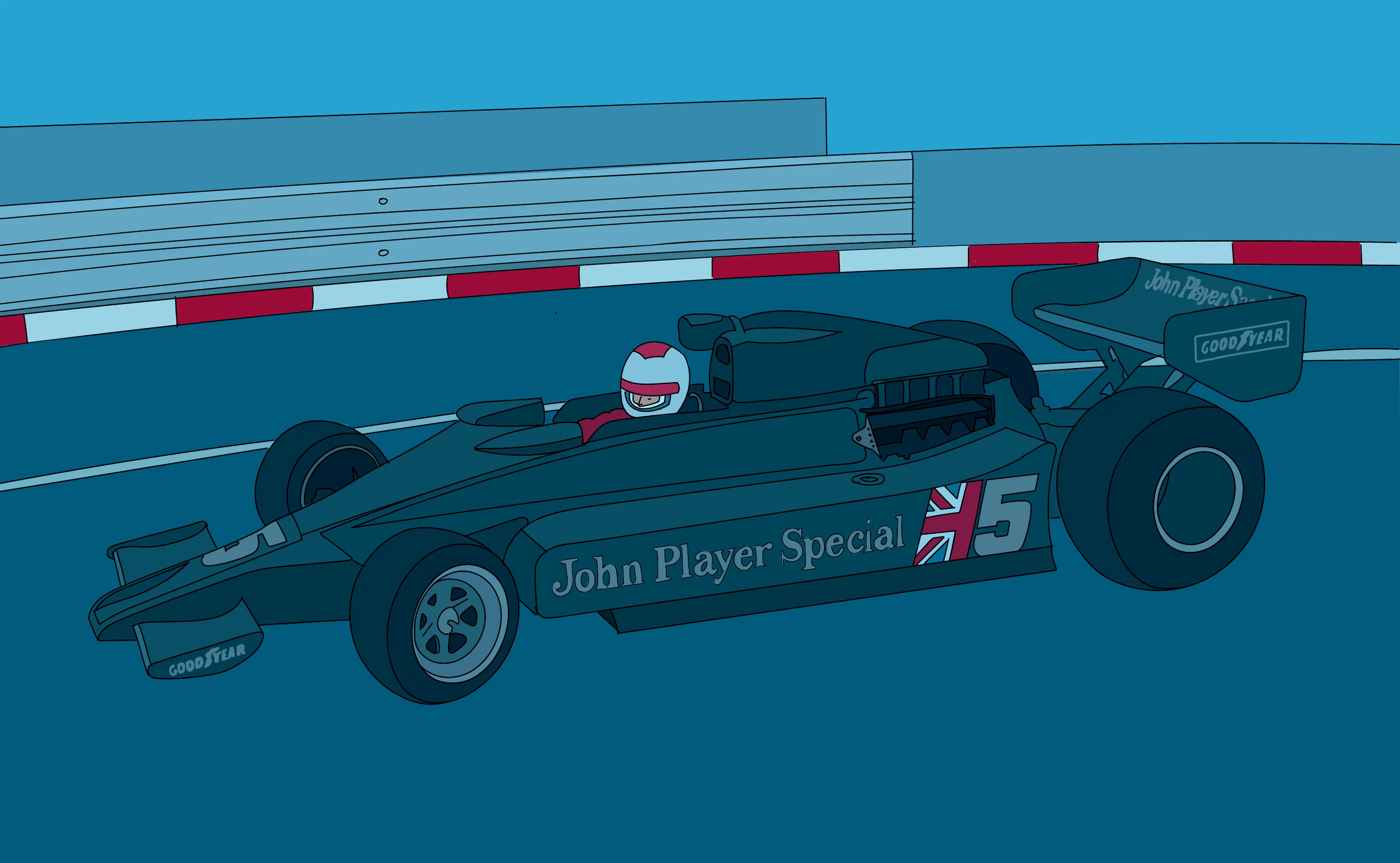
The Lotus 79 F1 car, designed by Colin Chapman and aerodynamicist Peter Wright, was the first car to take advantage of ground effect by creating a low pressure area on the underside of the car, allowing it to corner faster. This innovation was due to an accidental discovery. Wright had originally noticed an unexpected increase in downforce during windtunnel testing when an airfoil he was testing was sagging and positioned close to the floor. He subsequently propped the airfoil up on vertical pieces of cardboard, which had the effect of forcing air to move even faster under the airfoil, increasing the downforce significantly. Wright had stumbled upon the Bernoulli Principle which was discovered in the mid 1700s and is used to make planes fly.
Chapman took Wright’s discovery and designed and engineered a car in the service of maximizing ground effect. The car utilized venturi tunnels and springloaded side skirts to channel and accelerate airflow under the car. This generated 30% more downforce which necessitated strengthening the chassis and stiffening the suspension. The extra downforce allowed the car to run a smaller rear wing which reduced drag and increased straight-line speed. Chapman moved the fuel tank behind the driver which freed the sidepods to generate additional downforce. He also reduced the packaging of the car’s transmission to streamline the flow of air over the rear wheels. In essence, the car was an upside-down airplane wing.
The Lotus 79 is a good example of people innovating by placing themselves in a context where there are opportunities and rewards for paying attention to dynamics that other people miss. Wright’s discovery of ground effect and Chapman’s ability to design and engineer a car to take full advantage of what they had discovered made the Lotus 79 one of the most dominant and influential cars in F1 history. It ushered in the aerodynamics age in Formula One and reshaped motorsport.
Instant Photography
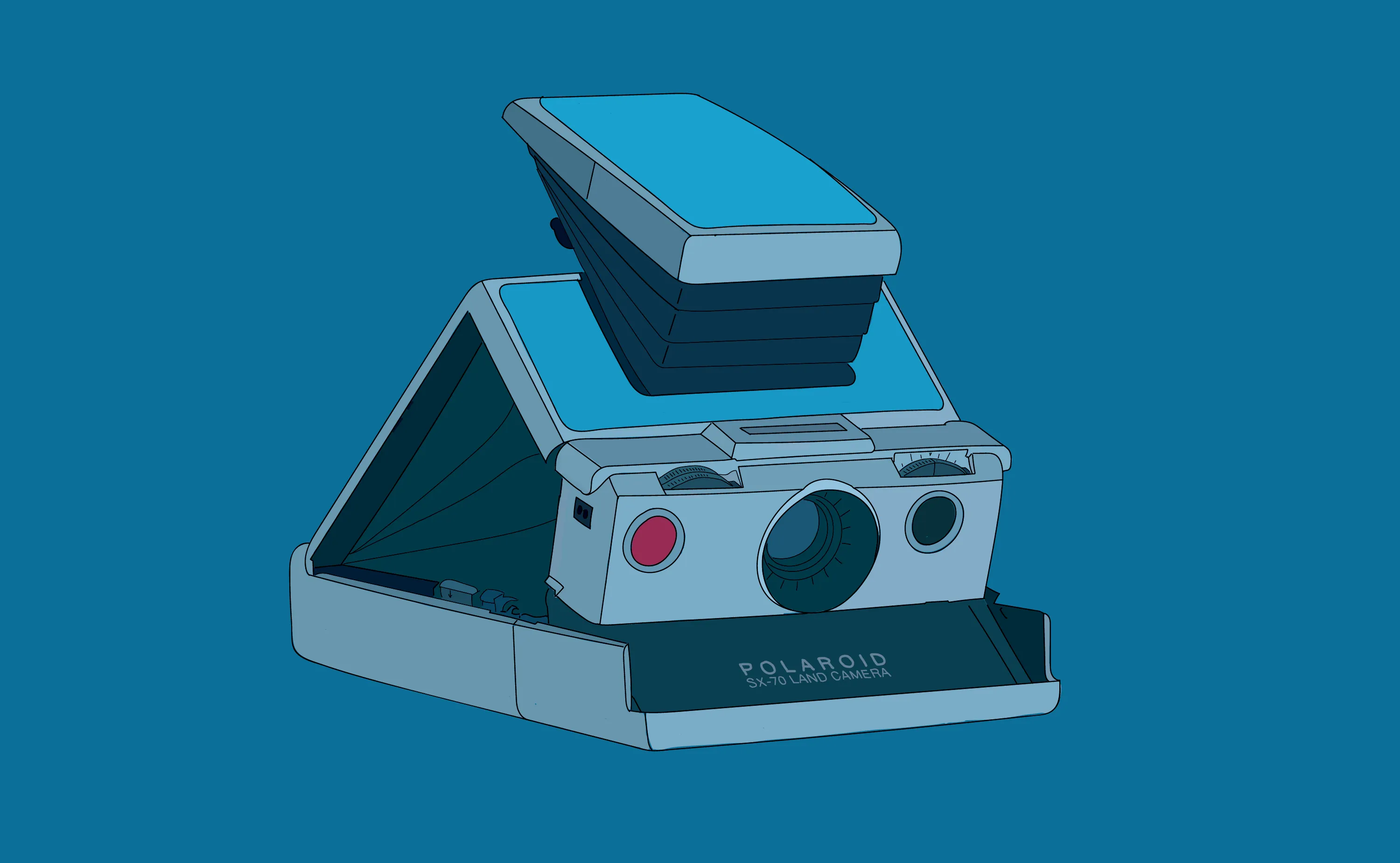
Physicist and inventor Edwin H. Land began the process of developing instant photography in 1943 when his three-year-old daughter asked why she couldn’t see photographs right after they were taken. The work Land had done on developing polarizing plastic film used in photography, sunglasses, and military equipment gave him the necessary experience to understand that instant photography was possible.
Land recounts: “It was as if all that we had done in learning to make polarizers, the knowledge of plastics, and the properties of viscous liquids, the preparation of microscopic crystals smaller than the wavelength of light, the laminating of plastic sheets, living on the world of colloids in supersaturated solutions, had been a school both for the first day in which I suddenly knew how to make a one-step dry photographic process and for the following three years in which we made the very vivid dream a solid reality.”
Land’s radical innovation was to miniaturize the darkroom and place it inside the camera. Over a 30-year period, the Polaroid company refined and extended instant photography to eventually create a camera that could deliver an instant color photograph with one press of a button.
The story of instant photography demonstrates that understanding what’s at stake often requires a deep foundation of knowledge and know-how earned by inventing other things. Land’s prior accomplishments as an inventor prepared him to take the question his daughter asked seriously. His understanding of engineering, chemistry, and physics enabled him to realize the problem of instant photography could be solved. The problem was complex enough that it took Land and his team more than three decades of inventing and engineering to arrive at the ultimate solution. Invention begets invention. The Polaroid Instant Camera fundamentally reshaped photography and created a revolutionary product category.
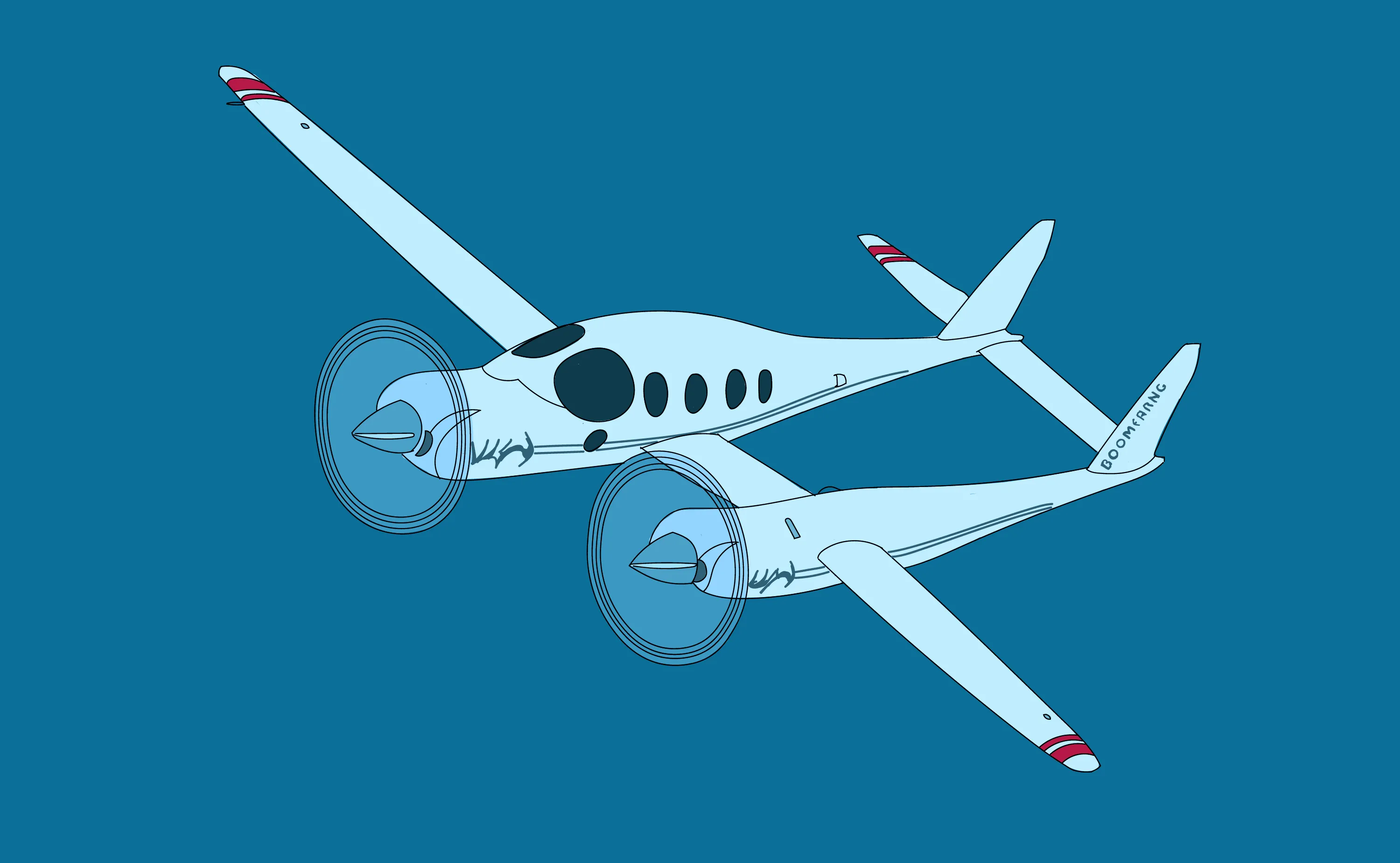
Burt Rutan's Boomerang
Inventions that solve a longstanding problem through unconventional means are often a signal that someone understood what was at stake significantly better than those who had come before them. The Rutan Boomerang designed by aerospace engineer Burt Rutan is one such example.
Dual-engine planes offer a measure of safety over single-engine planes. They employ two different configurations: an engine on each wing, or a centerline pull-push configuration. Both designs involve tradeoffs. The more common symmetrical wing-mounted arrangement offers a quieter flight and more cabin room, but can become dangerous when one engine fails and thrust is no longer evenly balanced. The centerline layout behaves better when one engine fails, but this arrangement takes up valuable space, is noisy, prone to vibration, and is inefficient.
Rutan’s innovative solution was to stagger the engines while utilizing asymmetrical, forward-swept wings. This radical design improved single-engine flight handling, improved efficiency, reduced cabin noise, and increased interior space.
Convention can often get in the way of seeing a problem or rethinking it from fundamental principles. Rutan’s brilliance lies first in deciding to address the flaw in dual-engine designs and second by being able to put aside a preference for symmetry in order to explore alternative layouts. Rutan’s understanding of what’s at stake enabled him to buck more than 60 years of convention to solve a problem in dual-engine airplane design. It serves as an example of the power of seeing problems with fresh eyes and building up an understanding from first principles.
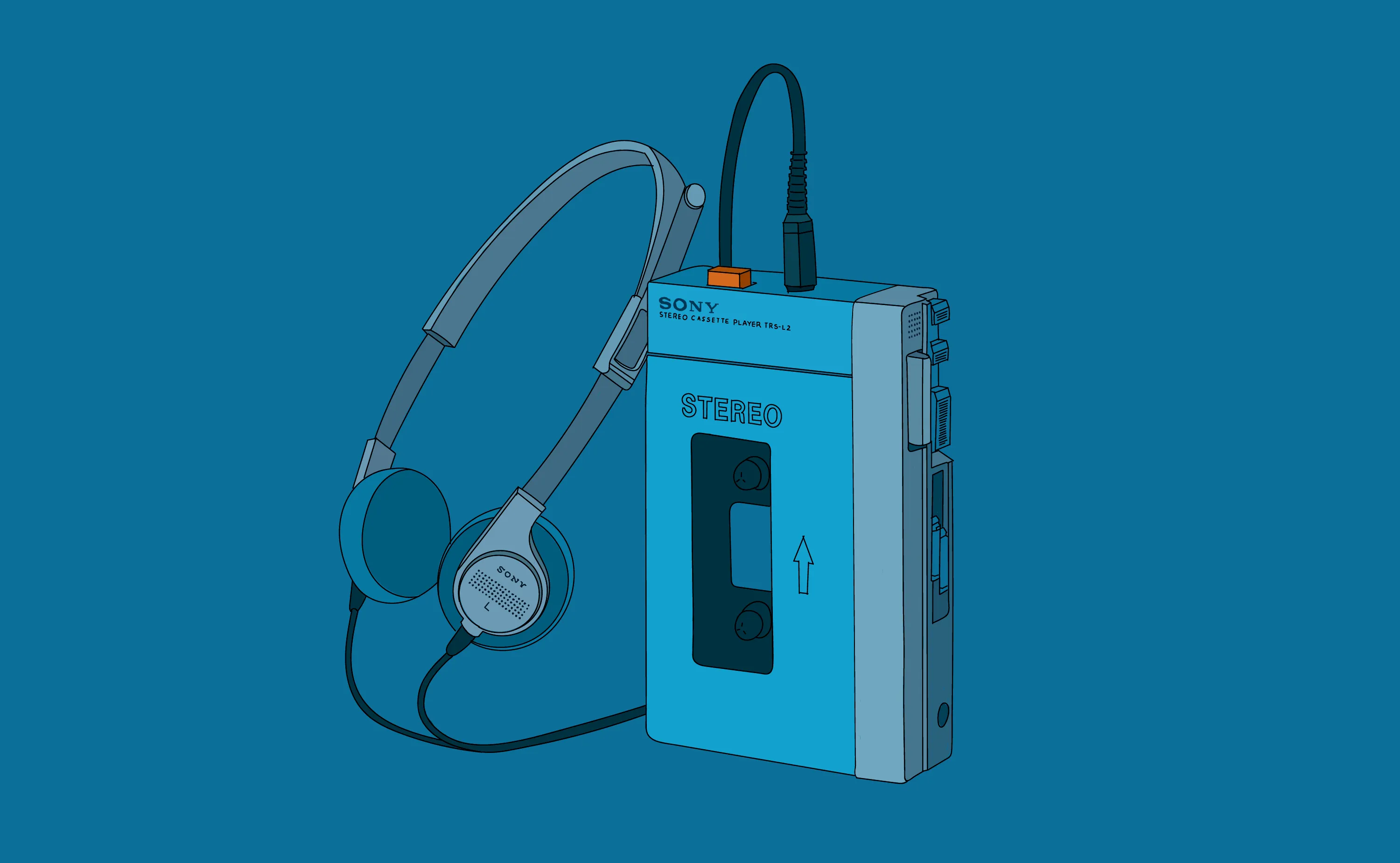
Personal Music Player
The journey to understand what’s at stake often starts when someone with deep domain knowledge recognizes there is a problem worth solving. In 1979, Sony cofounder and engineer Masaru Ibuka wanted a lightweight way to listen to opera on long international flights. He had Sony engineers modify a reporter’s tape recorder to make a small portable cassette player. Sony cofounder Akio Morita saw this invention and had the insight that it would be good for the youth market.
Sony’s engineers made use of advances in transistors, battery technology, and headphone miniaturization to be able to create a device that was small enough to fit into a pocket and efficient enough to run on AA batteries. Sony made the decision to simplify the device by focusing on playback rather than recording, which helped bring the cost of the device down, while making it smaller. The design was refined over several iterations until the recipe was perfected, and the device took off.
The Sony Walkman fundamentally changed the personal audio space and eventually paved the way for the iPod, inspiring Steve Jobs. It had a huge cultural impact including inspiring William Gibson to write Neuromancer in 1984.
Understanding what’s at stake often requires deep technical expertise and the good fortune of timing. Industry-defining inventions often arise when there are a critical mass of enabling technologies that have already been invented. Even when all of the ingredients are present, fully understanding what’s at stake may require many rounds of exploration and iteration until the signal becomes clear, and full understanding may require multiple people to chip away at the problem.
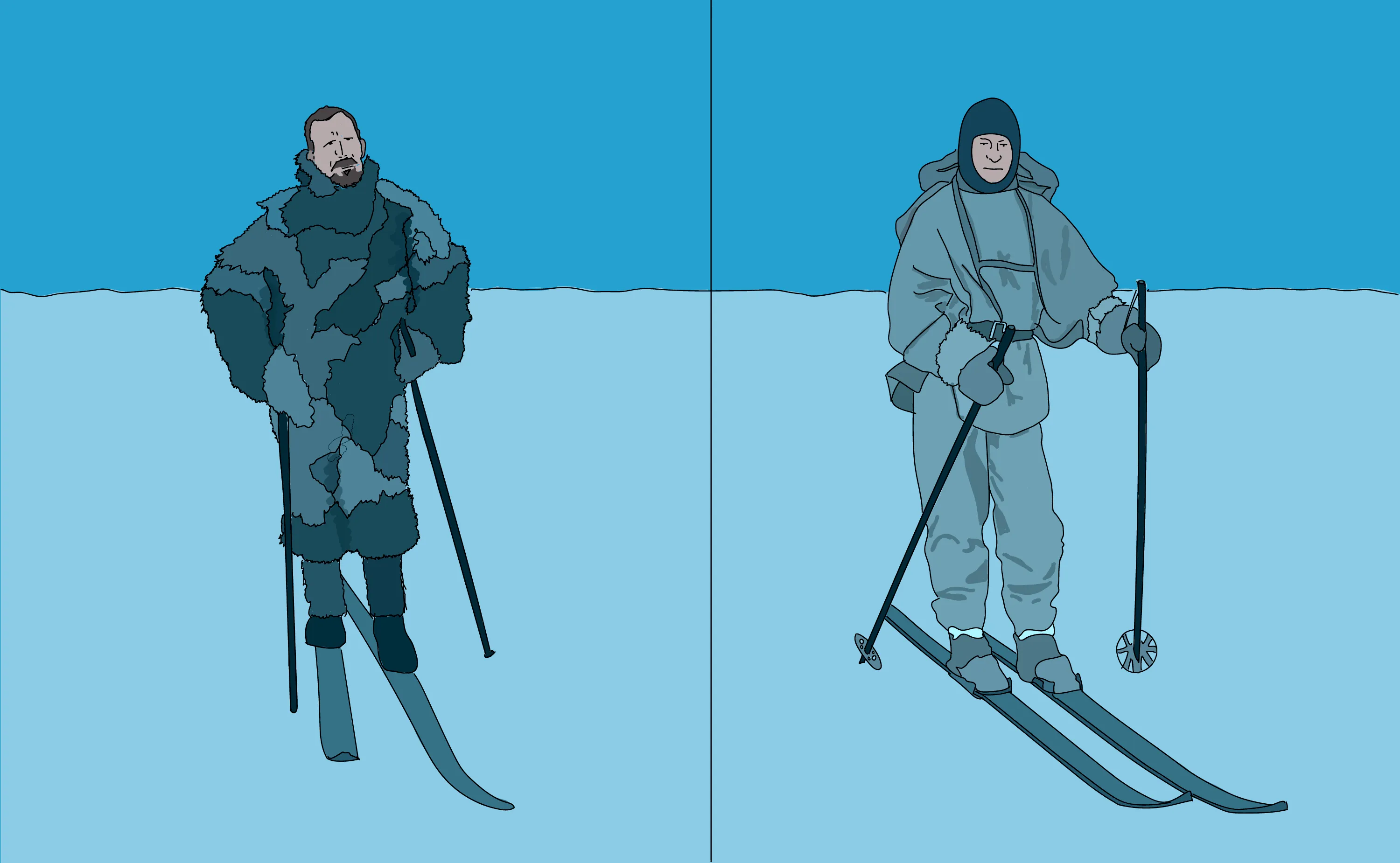
Amundsen and Scott
Accurately understanding what’s at stake can mean the difference between success and failure, sometimes with life or death consequences. One of the best illustrations of this is the story of the race to be the first to reach the South Pole in the early 20th century.
Roald Amundsen was a Norwegian explorer and a meticulous planner. He and his crew used skis and dogsleds for transport, and adopted the clothing and energy-dense diet of Inuit people they had encountered during their research during earlier expeditions. Amundsen well understood the dangers inherent in such an enterprise and planned to travel as quickly as possible while keeping supplies and rations to a minimum. His plan included eating the dogs as the expedition progressed in order to keep the expedition’s weight to a minimum. Amundsen reached the South pole first on December 14th, 1911. His entire team made it back to base in good health and spirits.
Robert Falcon Scott was a British explorer who chose to treat the expedition to the south pole as a scientific and technological endeavor. He planned to employ motorized sledges and ponies to transport supplies, and had his team outfitted with the best manufactured clothing. Scott’s team ran into a series of setbacks which were largely due to poor planning, poor execution, and a lack of understanding or acceptance of the conditions in which they were operating. Scott’s transport failed, resulting in him and his team having to drag supplies, drastically increasing their daily caloric expenditure. Scott and his team reached the South Pole in second place on January 17, 1912 suffering from frostbite and malnutrition. He and his entire team died on their return trip to base.
When setting out to do something hard, and the consequences for failure are dire, it’s critical to be able to understand the true nature of the problem to solve for. The better a team understands what’s at stake, the more likely their effort will be successful. The more a team attempts to substitute ambition for reality, the more likely failure will be the outcome – and the harder reality is likely to assert itself. The job here wasn’t to reach the South Pole first and do science along the way. The job was to reach the South Pole as quickly and efficiently as possible in extremely hostile conditions and bring everyone home safely. In short, how each of these explorers understood the problem influenced the outcomes.
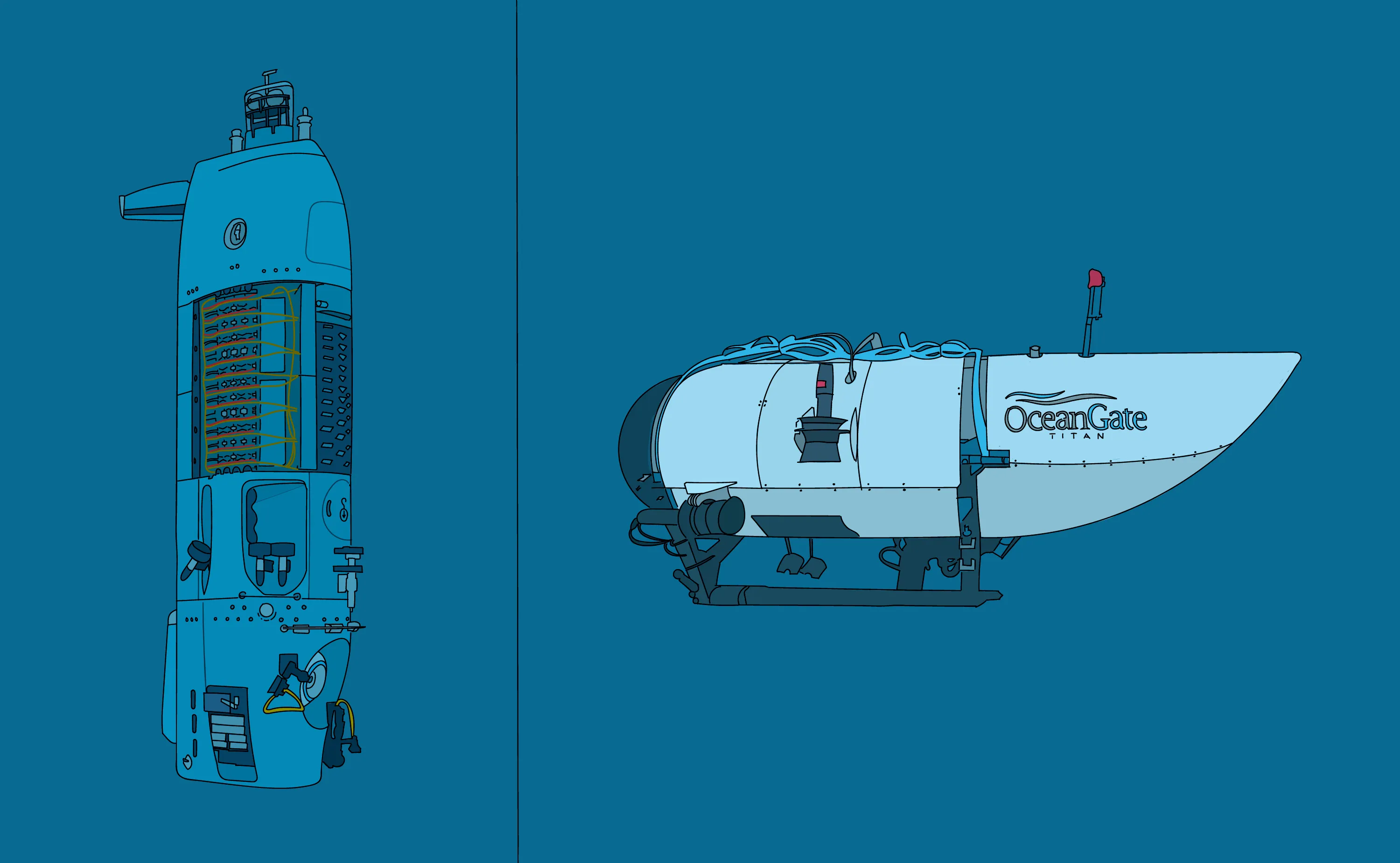
Deepsea Challenger vs. OceanGate Titan
When operating under harsh conditions in high consequence situations, it’s incredibly important to design and engineer in a way that acknowledges the context in which you’re operating. Deep-sea submersibles operate under conditions that are harsher than the vacuum of space, and they can illustrate the difference between adequately understanding what’s at stake and failing to understand.
Deepsea Challenger was designed to bring director and explorer James Cameron safely back from the bottom of the Mariana Trench 35,787 ft. (10,989 m) deep. It featured an innovative vertically-oriented hull design made of special materials engineered to withstand 16,000 pounds per square inch, a 2.5 inch thick steel sphere to enclose the pilot, and redundant systems to ensure the sub could return to the surface in the event of a critical system failure. Deepsea Challenger enabled Cameron to be the first solo diver to ever reach the deepest part of the ocean and safely return to the surface.
Oceangate Titan, created by entrepreneur Stockton Rush, was a submersible intended to take tourists down to view the Titanic at 12,500ft (3,800m). It was not designed or engineered following accepted best practices. The submersible employed an experimental carbon fiber hull and a titanium-shelled viewport that was rated only to 2130ft (650m). It was controlled using a modified wireless Logitech game controller. Oceangate Titan suffered numerous unaddressed issues during its construction and operation. Tragically, Oceangate Titan imploded catastrophically while attempting to reach the Titanic, instantly killing Rush and four occupants. Oceangate’s story serves as a cautionary tale of what happens when ambition and hubris come in contact with physics.
The contrast between these two stories highlights the importance of understanding the conditions in which you will be operating and the consequences of underestimating the severity of those conditions. James Cameron designed a submarine that made full use of best practices, material science, and engineering know-how to enable him to reach the deepest spot on earth and return safely. Stockton Rush assumed that he could bend reality to his will and suffered the consequences when it didn’t.
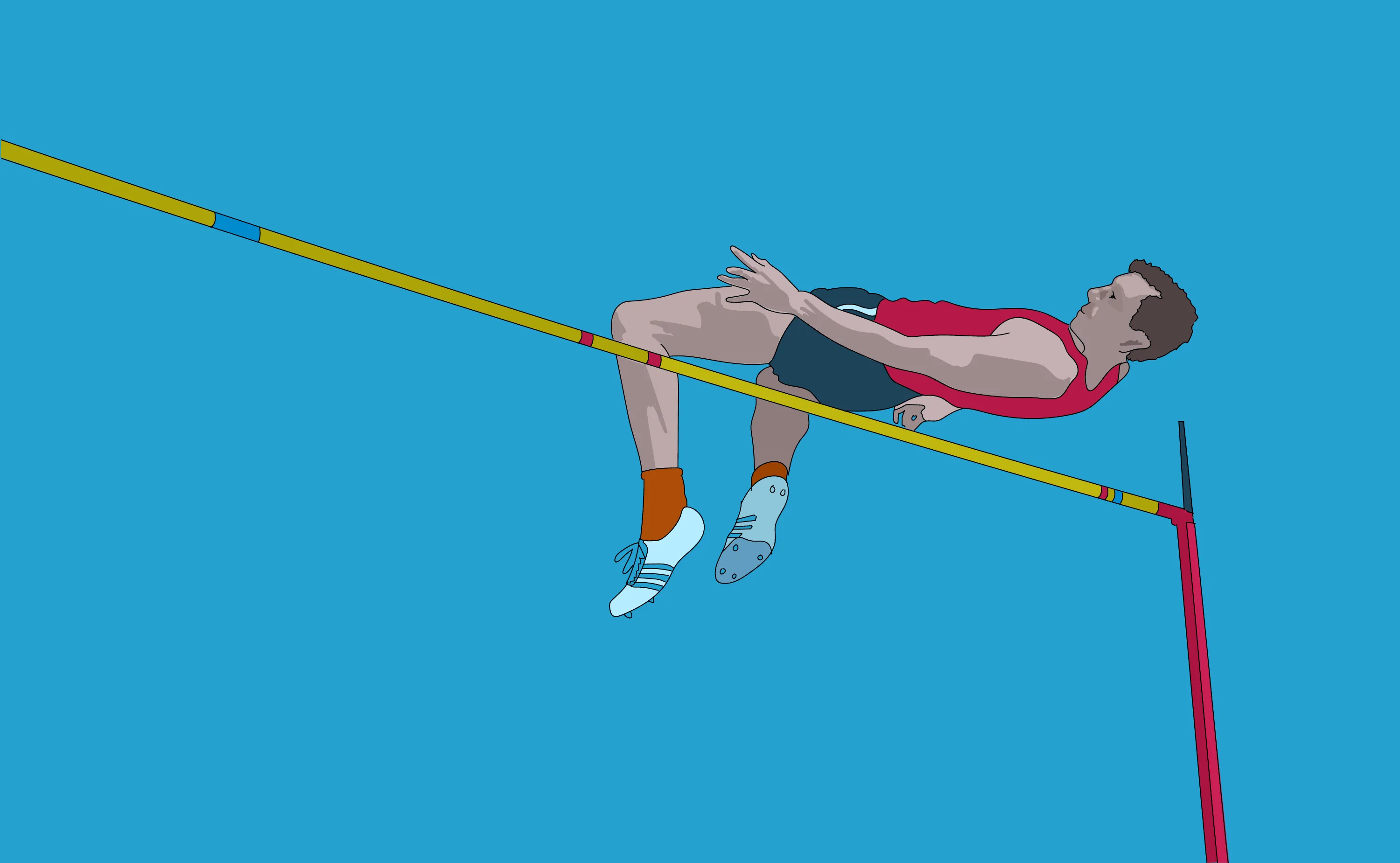
Fosbury Flop
When the underlying rules or conditions change in a competitive situation, it can open up opportunities for people to approach a problem from a different perspective. The story of Dick Fosbury and his game-changing Olympic high jump technique are a great example of this. Seeing a problem from a different point of view can help people find advantages over the conventional way to do things.
The running high jump made its debut at the inaugural Summer Olympics in 1896. In it, a jumper runs towards a bar set at increasing heights and attempts to clear it without dislodging the bar. From its inception, the event saw a slow evolution of technique as athletes looked for advantages and adapted to changes in the landing area as it transitioned from hard ground to piles of sand. Athletes employed a variety of techniques starting with scissoring their legs over the bar, laying parallel to the bar when crossing it, and facing downward over the bar before landing prone.
In preparation for the 1968 Summer Olympics, Civil engineering student Dick Fosbury realized that by approaching the high bar backwards rather than forwards, and curving over the high jump bar, he would have greater mechanical advantage compared to his forward-facing competitors. Fosbury’s technique lowered the effective center of gravity of the jumper below the bar. This technique was made possible by the introduction of safety padding to cushion a jumper’s landing. Dick Fosbury won the gold medal in the 1968 Olympics, and his technique has been the standard ever since.
This story is inspiring because it illustrates the importance of pulling in fresh perspectives when operating in a competitive context where there has been gradual evolution. When the underlying rules or conditions change, there can often be opportunities to go back to first principles in search of an advantage. Dick Fosbury’s solution is striking in that it required doing the unintuitive thing - clearing the bar backwards. It’s hard not to be moved by Fosbury’s example and wonder whether there might be opportunities to better understand what’s at stake when foundational technology evolves and underlying conditions change.
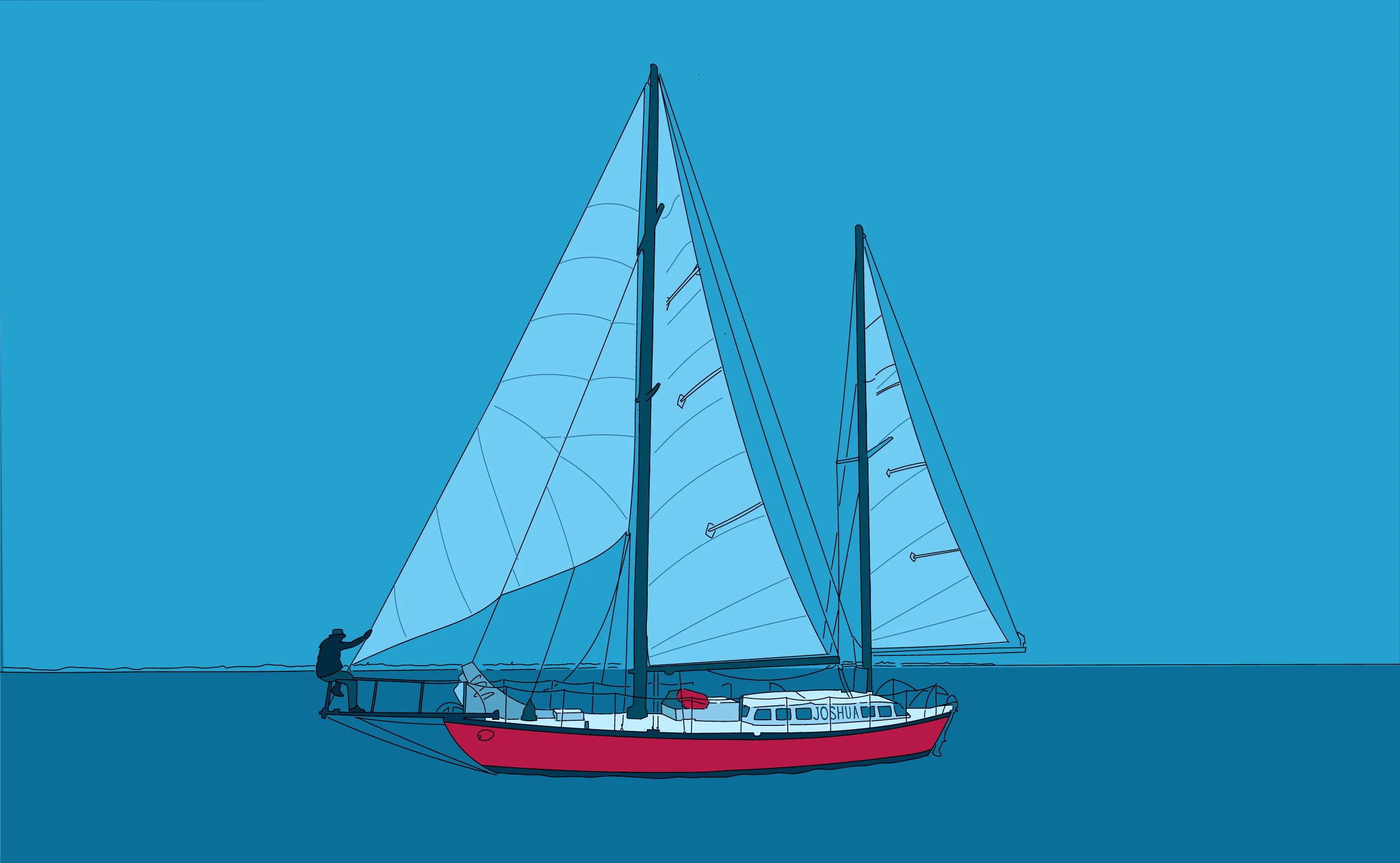
Bernard Moitessier's Joshua
When operating in challenging conditions, or attempting to achieve something that no one has ever done before, success or failure can come down to understanding the most important problem to be solved.
In 1968 the British newspaper Sunday Times offered a £5000 prize for the first sailor to non-stop circumnavigate the globe. Experienced sailor Bernard Moitessier understood that the key problem to solve (minimize the need for maintenance) was the way to achieve the objective (sail around the world faster than anyone else and reach the finish line first). Moitessier obsessively designed his ship Joshua to be water-tight, made of the most appropriate materials, be mechanically simple and repairable by one person on the open sea. He ran the race without an engine, avoided electronics, and jettisoned the extra equipment and supplies that he judged to be extraneous so that Joshua would be lighter and better able to handle the stresses of the journey. Moitessier proactively performed maintenance on the ship each day, addressing problems before the point of failure.
Moitessier was the fastest around the world, but opted not to cross the finish line first. He enjoyed the sailing and solitude so much that he decided to continue on with his journey rather than win the race and claim the prize. Of the eight remaining competitors in the race, only one finished, and one committed suicide.
This story of invention and achievement is similar to Paul MacCready’s story. In both cases, there’s a key insight gained from a lifetime of experience that unlocks everything else. Moitessier understood what was at stake in solo circumnavigating the globe far better than his competitors. By designing a ship that required little maintenance, Moitessier was more rested and better able to handle the issues that did arise, and this advantage relative to his competitors compounded as the race progressed. His understanding of the problem to solve for, and his ability to organize the effort around solving the problem enabled Moitessier to thrive in some of the most challenging and unforgiving conditions on the planet.

Apple iPhone
When we see a disruptive change in the competitive landscape, it’s often a sign that someone gained a much deeper understanding of what’s at stake. The invention of the Apple iPhone is one such event.
When the iPhone was released in 2007, it revolutionized the smart phone segment. The accepted wisdom was that a physical keyboard was a requirement for rapid typing. By replacing a physical keyboard with a capacitive multi-touch screen the iPhone’s user interface could change, depending on the needs of the application. At launch, the iPhone was the most expensive smartphone ever and it was missing many of the ingredients people assumed were non-negotiable, including a physical keyboard, app store, spell check, and Adobe Flash support. Despite this, the iPhone was a runaway success and entire industries were caught off guard. By collapsing smartphone, internet communication device, music player, and digital camera, the iPhone ushered in a lasting change in how the world uses computers. Nearly two decades later, the iPhone’s form factor has become the de facto pattern for smartphones.
The magnitude of Apple’s invention can’t be overstated. At the time of the iPhone’s launch, BlackBerry commanded 50% of the smartphone market in the United States. A decade later it comprised 0%. Digital photography saw a similar shift as computational photography, advances in mobile compute, and wireless networking made the iPhone a convenient and powerful camera that could evolve much more quickly than digital cameras and lenses. Microsoft failed to recognize the importance of the iPhone and missed the boat. Intel failed to recognize the importance of energy efficiency as a driver for chip design. The massive popularity of the iPhone has allowed Apple to enjoy huge economies of scale in integrated chip manufacturing and now all of Apple’s processors are built on the same architecture. Advances in mobile processing, high resolution screens, and sensors directly contributed to the development of consumer VR headsets.
The brilliance of Steve Jobs and Apple was to approach the problem of the smartphone by building up from a set of intuitions about what the future of mobile computing would be like, and recognizing that the problem could only be solved through a holistic reconsideration of the smartphone. The invention of the iPhone required an integration between hardware engineering, software engineering, wireless networking, human interface design, optics, multitouch technology, Apple’s software ecosystem, and physical retail footprint. It took a visionary leader coupled with some of the world’s most talented designers and hardware engineers working together to overcome engineering challenges, accepted wisdom, and assumed immovables.

American Push Speedskating Technique
Often, competitive strides are made when people rethink problems from first principles. Drawing from expertise from a different but related context can help people work past the blindspots that come with deep familiarity with “how things are done”.
In Olympic team speedskating pursuit, two teams of three skaters race against each other for 8 laps over 3,200 meters starting at opposing sides of the track. The first team to complete the required number of laps wins. Since the race’s inclusion at the 2006 Winter Olympics in Turin, the traditional technique was to have racers trade off the effort of breaking the wind through a series of rotations where a skater will be in the lead before moving over to the side for the next skater to break the wind.
After having struggled to compete with the best in the world for more than 15 years, U.S. Speedskating’s head of performance Shane Dolmer worked with aerodynamicist Ingmar Jungnickel to develop an approach that would help the U.S. team close the gap. By approaching the problem with “no preconceived notions ” and by drawing on his expertise in optimizing performance in adjacent sports like bicycle racing, Jungnickel was able to find an advantage borrowed from Nascar racing. Jungnickel had observed that pushing from behind was more aerodynamically beneficial than rotating one skater into the back. By placing the strongest skater in the back (rather than being in the front) and having the rear two skaters physically push the skater in the front of them, the team skates as a unit. Total frontal area is reduced and constant for the race, drag is reduced, and more of the skaters’ energy is spent on generating speed rather than breaking the wind.
Prior to the invention of this technique. It was common practice to have athletes train separately and have them assemble and train shortly before major competitions. Capitalizing on the theoretical advantage required that the team be able to train extensively together in order to be able to operate as one synchronized entity. The technique and training resulted in huge performance gains, allowing the US team to shave more than two seconds off the team pursuit world record. In the 2022 Winter Olympics, the top three teams utilized the technique and it has revolutionized the team pursuit.
In cases like this one, understanding what’s at stake isn’t about a flash of insight, it’s recognizing the downstream implications and figuring out what work and sacrifices will be required in order to take full advantage of the discovery.

Google Page Rank
When the web was young, it was a challenge finding good and useful websites. The rate of growth in the web made it a challenge for manually curated lists of websites to stay up to date. The faster the web grew, the harder it became to offer comprehensive lists of websites for any given topic.
Google founders Larry Page and Sergey Brin found a way to solve for this problem in two important ways. The first was to recognize that it was possible to use hyperlinking in websites as a signal that a website was useful or not. Google’s Page Rank system could rely on the distributed intelligence of people to determine which sites were popular. Google’s second innovation was to employ fast search instead of taxonomically-driven catalogs. As long as search results were instantaneous, the perceived cost of making a mistake was low, and fast errors helped train users on how to best construct a search query.
This solution made it possible for Google to become more useful and valuable as the web grew more and more complex, while competitors like Yahoo! collapsed under the weight and cost of trying to keep pace with the web.
Coming up with a good solution required recognizing and embracing the messy, organic, and growing nature of the web rather than attempting to organize it. Google won out over its competitors because Page and Brin understood the nature of the problem – and its consequences more clearly than their competitors.
In an age where execution speed matters, it can be hard for companies and teams to recognize when the boundaries of a problem aren’t yet well understood. Incomplete or poor understanding usually results in the wrong solutions being created.

Citicorp Center
Understanding what’s at stake for a given project doesn’t always happen before a project is completed. Sometimes full awareness comes only after a complex project has been completed.
Citicorp Center in New York owes its unconventional design to a requirement to accommodate preexisting buildings on the site. In order to make the design work, structural engineer William LeMessurier placed the support columns in the center of the building rather than on the corners, and employed a 400-ton mass dampener at the top of the building to ensure that the skyscraper wouldn’t oscillate in windy conditions. Construction was completed in 1977.
In 1978, LeMessurier learned that there was a flaw in the design due in part to the way in which the structural braces had been fastened during construction. If power was lost during a strong storm and the mass dampener ceased to function, there was a high probability that the building would collapse. LeMessurier had designed the building according to NYC building code, but the code did not make a provision for diagonal wind loads. The diagonal case would cause the building to twist, which would place more stress than the building’s structural supports could handle. LeMessurier had the courage to disclose the problem to the city and worked to enact the solution in secrecy, strengthening the building’s critical structural supports. Disaster was averted and Citicorp Center still stands today.
This story shows that it’s possible to engineer a complex structure in a way that meets all the stated requirements, and still produce something that will fail. LeMessurier’s duty of care as a structural engineer extended past NYC building code and thousands of lives were saved due to his diligence. In high-consequence contexts, the more someone can understand what’s at stake and take responsibility for the overall success of a project past its completion, the greater the chances adverse outcomes can be avoided.
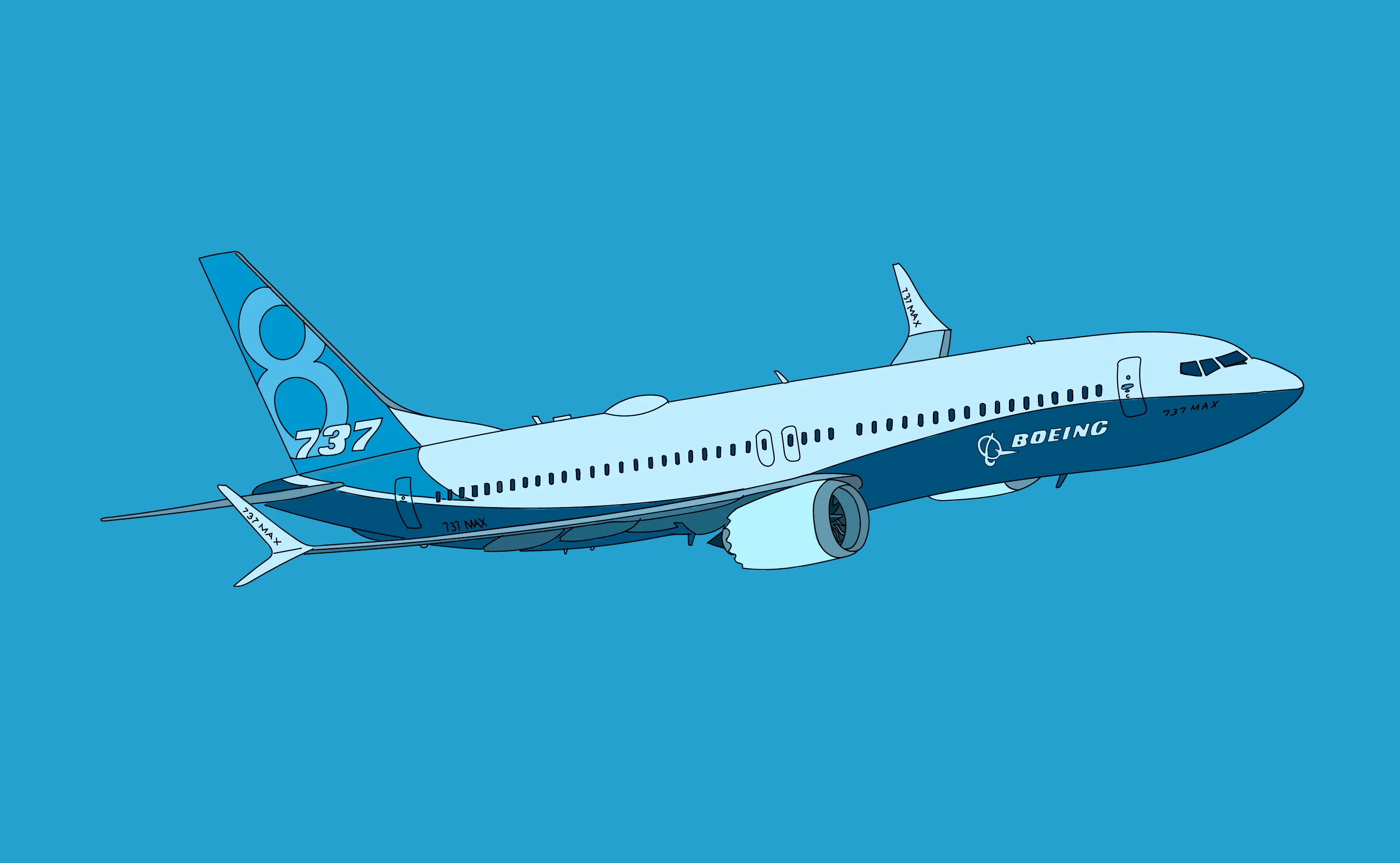
Boeing 737 Max 8
Entire organizations of people often fail to understand what’s at stake, especially when they are motivated and rewarded in ways that may run counter to public need.
One illustration of this is Boeing’s effort to compete with Airbus by producing an updated version of the venerable 737. In order to bring the plane quickly to market while keeping costs down, Boeing redesigned the plane with larger, more fuel efficient engines. The size of the engines required moving them forward on the wing, which had the effect of changing the plane’s center of gravity. This modification necessitated the creation of new software controls to compensate for the change in the plane’s handling. However, in order to prevent the plane from being reclassified by the FAA, which would result in additional pilot training, the new software system was hidden from regulators and pilots. It was not built with the kinds of redundancies and failsafes typically required for such a critical control system. This design flaw resulted in two 737 Max 8 crashes killing 346 people and grounding the plane for two years. The desire to compete led Boeing to employ shortcuts that resulted in catastrophic consequences.
The larger an organization is, the harder it can be for individuals to fully understand or take responsibility for the implications of the design and engineering decisions made on a project, especially when the accumulated result of those decisions happens at a distance. It’s important for large product and technology organizations to have systems and culture in place to ensure that they stay connected to the downstream impacts of their decisions. Strong regulatory oversight is also needed when lives are at stake.

Drone Warfare
Extreme situations of survival often create the condition where people are forced to look for advantages. Understanding what’s at stake more effectively than an opponent can change the course of history.
In 2022, Russia launched a full-scale invasion of Ukraine using conventional weapons. Initially Russia enjoyed a significant arms advantage and quickly gained ground. Ukraine was forced to innovate using low-cost first person view drone technology. A $600 drone that can be manufactured in days can be used to destroy targets costing millions that can take years to replace. Innovations in drone manufacturing have enabled Ukraine to spool up production to more than 10 million drones per year in 2026. Ukraine’s success suggests that sustained warfare in an asymmetrical conflict is an economics and innovation problem.
While it’s unclear what the long-term outcome of the conflict will be, bringing the cost of guided weapons down by orders of magnitude will have a profound impact on how war is waged in the future. As autonomous AI systems find their way into military drones, we can anticipate that the accuracy and lethality of drones will continue to go up.
Understanding what’s at stake will have another consequence. The countries that recognize this shift sooner will likely be better prepared for conflict in the future. Warfare will no longer be waged using expensive, complex, slow-to-manufacture machines and systems. It will be waged using hardware and software that can be cheaply and rapidly evolved as conditions change.
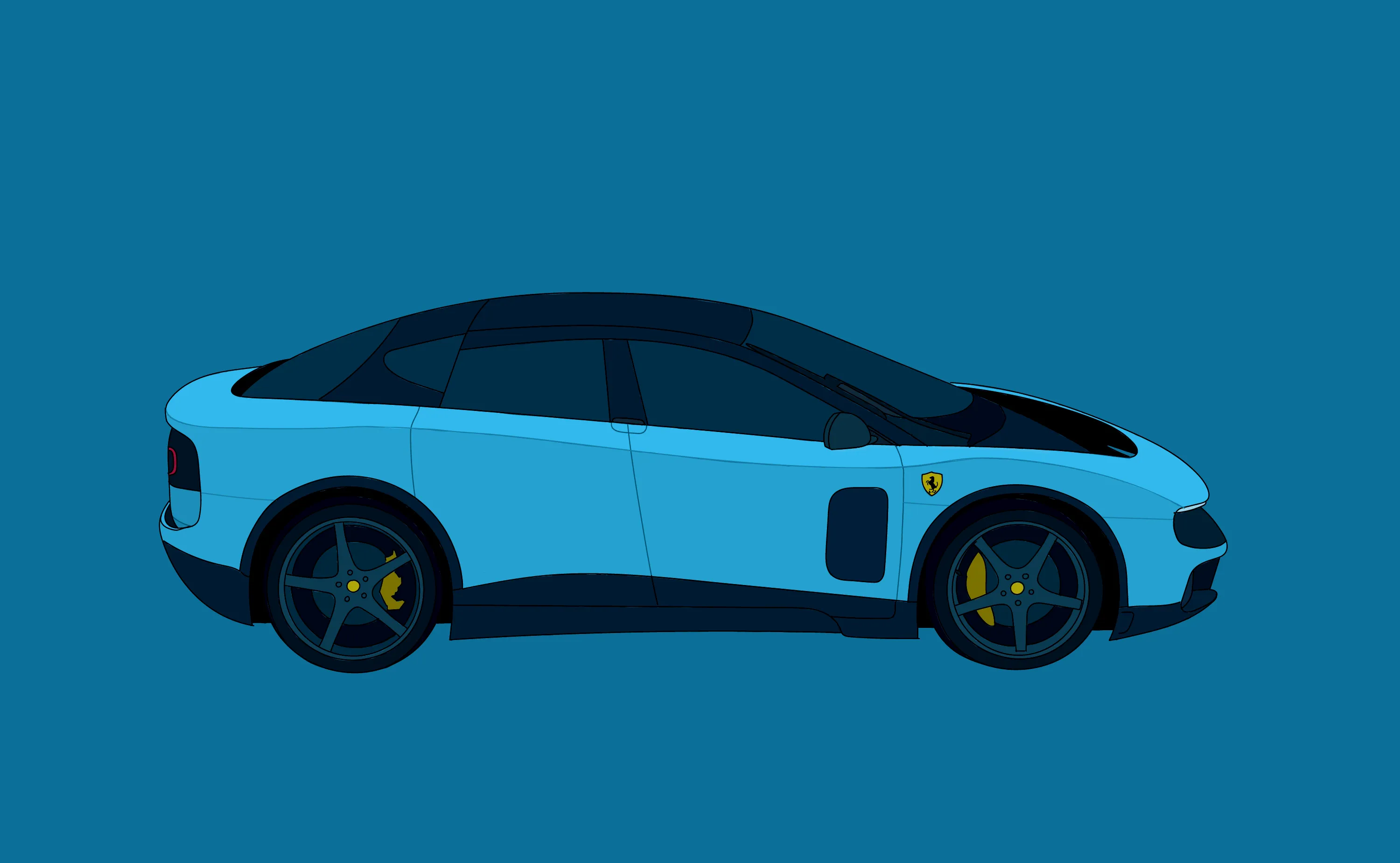
Ferrari Luce
One of the challenges with inventing something new is to understand all of the things that must be true and present in order for the new thing to work and be accepted. To make something new requires breaking away from what’s come before but this can place the act of invention in tension with the expectations that come with an established domain. The controversial Ferrari Luce electric car designed by Jony Ive and Marc Newson in collaboration with Ferrari Design Studio is a fascinating example that highlights some of the challenges with making something new in a context with a rich history and cultural attachments.
Ive and Newson were tasked with designing the first fully electric Ferrari, which represents a significant departure for the brand. Critical reception of the car has been largely negative. The general consensus is that the design appears to resemble an Apple product rather than a Ferrari. The interior design of the car suggests that Ive and Newson had a great deal of latitude designing for human factors while the exterior and SUV-like form suggest that the design had to bow to the constraints of the electric platform and the need to maximize aerodynamic efficiency to preserve range.
At present, it’s hard to determine where this project lies in relation to understanding what’s at stake. Ive and Newson are storied designers, so we have to consider that they understood the brief that they were given and executed on that brief to the best of their abilities. It’s also possible that due to their celebrity, they were given a level of freedom that prevented them from doing the work to understand Ferrari-ness, and their client failed to provide the necessary feedback and constraints required to arrive at the best solution. It might also be that the Ferrari identity is so closely bound with the internal combustion engine that no amount of designing could result in an electric Ferrari that the public would accept. On the other hand, the first allocation of ~500 models sold out over a two-month period, so perhaps this is a sign that people will warm to the design over time.
The Ferrari Luce demonstrates that understanding what’s at stake can be difficult when you’re in the middle of inventing, and especially when a project carries as much cultural freight as this one does.
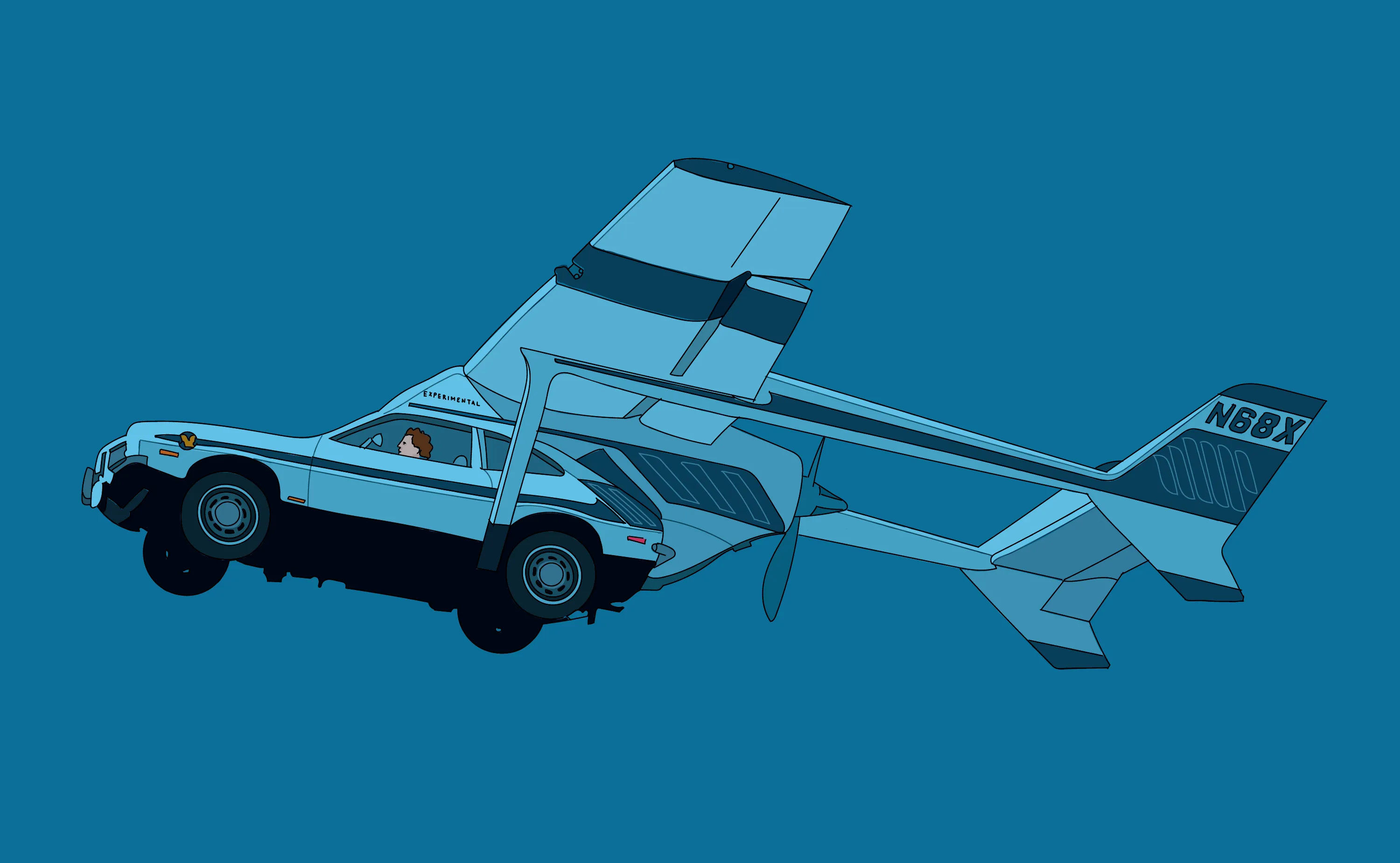
AVE Mizar
Yes, the Ave Mizar was a real thing (humans are amazing!), and yes, it ended as well as you can imagine. In the early 1970’s Henry Smolinski and Harold Blake had a dream of making an aircraft that could be driven to and from the airport. They prototyped the vehicle by attaching a Cessna Skymaster airframe to a Ford Pinto. Their thinking was that the car’s engine could assist the airplane engine on takeoff, and the car’s wheels and brakes would rapidly slow the vehicle when it landed, resulting in a vehicle that could take off and land on a short runway.
On the one hand, the AVE Mizar is absolutely the result of out-of-the-box creative problem solving. Assembling preexisting components to quickly test out a concept can be a good strategy to employ. Supplementing propeller-based propulsion with ground-based propulsion to shorten take off distance is smart too. However, joining components that weren’t meant to work together can have unintended consequences when they are employed in a new context. Sadly, the AVE Mizar crashed on its second test flight in 1973 when a faulty weld on one of the wing struts failed, killing Smolinski and Blake in the process.
When setting out to invent something, especially in a high-consequence context, it’s important to acknowledge the possibility of failure and work to mitigate the worst effects. Smolinski and Blake were brave as hell to give this a go (I’d give a bunch to share a beer with these guys), but they were extremely foolhardy in their approach. This story shows that there’s a fine, hard line between creative thinking and wishful thinking. Where Paul MacCready had the experience and knowledge needed to solve for human powered flight, Smolinski and Blake were lacking the expertise and the resources needed to solve the problem they chose to tackle – or understand whether it was solvable given the technology of the day.
Recent advancements in the development of air taxis suggest that flying cars will be a thing about seventy years after the Ave Mizar first took to the air. Credit to Smolinski and Blake for seeing the future but it’s unfortunate they weren’t able to find a way to work towards it one small incremental lesson at a time. Being aware of how little you know is one of the preconditions for understanding what’s at stake when attempting to tackle a hard problem – and it’s also good insurance against betting too much at once.
Closing Thoughts
At the time of writing this essay, AI looms large in the computer industry. We’re living in a sci-fi age where it’s possible to conjure up software and software-derived things by asking for them. The age of AI is forcing people to ask some pretty hard questions about what our role will be in a world where it may be possible to delegate to software the job of form-making, writing, coding, design, mathematics, science, medicine, etc.
In software product design circles, we’re seeing designers working to try and reserve some space for themselves, some portion of the process where humans can still bring something useful and unique. There’s been a lot of virtual ink spilled on designers asserting that “taste” is one of the things that they can supply that can’t be automated away.
This strikes me as a kind of retreat, one that already accepts that computers and software will do the form-making from here on out. Despite being blown away at what AI has enabled me to make, I’m not convinced that this is a retreat we should be so eager or ready to make because it deprives us of the best vehicle we have for understanding what’s at stake for a given problem or product.
So much of what’s important about designing isn’t the final form of the design. It’s in the work it took to get at what’s most important, grappling with the blank page and the constraints, finding ways to integrate all the different things the design needs to do. It’s in the negotiation that happens when the goals for a project come in contact with the real world. It’s in being able to ask whether the problem as specified is even the right problem to be solved in the first place. It’s in paying attention to when the world works differently than you imagine. It’s having to work against the friction, uncertainty, and fear inherent in making something new. It’s in developing the skills and expertise needed to be able to tackle the next harder problem – and then the next one after that.
When we look at the illustrated examples above, it becomes clear that understanding what’s at stake isn’t generally something that happens in a flash of insight out of the blue. The inventors mentioned in these stories came to their understanding over a lifetime of grappling with the problems and challenges that prepared them to see things differently than those around them, to make the connections that others were missing. These inventors were also the inheritors of those who came before them, people who had tried and failed, or tried and succeeded.
These innovations are important not just because they are evidence that their creators understood what was at stake, but also because the things they learned in the doing resulted in them being able to make progress on subsequent challenges. Paul MacCready took what he learned from the Gossamer Condor and Albatross and applied it to solar powered flight and developed a philosophy around doing more with far less. Apple learned a great deal from the invention of the iPhone, and innovations it made in mobile computing eventually reshaped its desktop computer landscape. Ukraine’s innovation in drone technology is in the process of completely reshaping how war is waged and how nations project power. The tragedy of the Boeing 737 Max informs subsequent plane design and reinforces the need to build in safeguards and redundancies in critical airplane systems.
If you want to see further evidence of the importance of the journey for building understanding, one would be hard pressed to do better than watching mathematician Terence Tao discuss how math and science have progressed for centuries, and the challenges mathematics now faces when AI is employed to “solve” longstanding math problems. Practicing mathematicians form interesting connections and understanding as they work through more challenging problems, and this kind of work often prepares them to make further discoveries. The effort required to clarify a successful proof so that it may be taught in textbooks also has value. Mathematicians gain useful insights by finding simpler ways to present their work, which in turn helps onboard the next generation of mathematicians. All of this slow labor is essential fuel for the engine that drives the march of discovery and knowledge.
Tao’s description of the impact AI is having in mathematics makes me wonder what will happen to our ability to understand what’s at stake if we contiune to invest in creating technologies that are aimed at (and rewarded for) automating away the struggle and messiness of making – the very thing that’s necessary to make real, foundational progress from one generation to the next.
I find stories of successful invention fascinating because they are examples of people coming to an understanding that turns out to be in alignment with how some aspect of the world operates. These stories are instructive because they teach us that innovation is possible even in well-established contexts, and they’re inspiring because they suggest that there might be other discoveries and inventions we might make if only we have the curiosity, awareness, knowledge, experience, skill, and luck to uncover them.
I think they also suggest that there are some behaviors that are more likely to result in successful outcomes when attempting to invent something new. Paul MacCready was successful in his effort to solve for human powered flight because he was able to reduce the unknowns faster than he expended his resources. Bernard Moitessier designed a ship that decreased the severity and frequency of breakdowns when they inevitably occurred, increasing his margin for safety. James Cameron designed a submarine following state-of-the-art engineering practices which helped him reduce the chances of an unrecoverable critical-systems error.
The stories of failure in invention are just as instructive. Some of these inventors and explorers put something out into the world and discovered that the world was not as they expected, that it operated according to a different set of rules than they had imagined, often with significant consequences. They were not able to chip away at the unknowns fast enough to succeed. Robert Falcon Scott made far too many unfounded assumptions before attempting to reach the South Pole and was unable to adapt when the conditions proved too harsh. Stockton Rush’s carbon fiber submarine hull weakened with each dive and then failed catastrophically. The more he dove, the more the unknowns compounded.
Given how quickly things appear to be evolving in AI, and how poorly we seem to understand what we’re making – and its impact, I wonder where we are on the spectrum of success or failure. On the one hand, it’s hard not to be shocked and impressed by how easy it is to conjure up software by conversing with a computer. But on the other, it feels like we’re right in the middle of participating in a very large and incredibly expensive experiment to see whether humans can make software that can be used to replace the kinds of inventing that has sustained humanity since we started using tools, but do it in a way that bears very little resemblance to how we’ve learned and invented in the past.
The jury is still out on whether we’ll ultimately be successful in this, but given the level of surprise frontier model makers seem to be having around how their software is behaving, the lack of clarity or consensus around what can be done to ensure it will behave well (or whether the makers of these software systems will behave well), the black-box nature of large language models, and their increasing complexity as they scale, it seems as if we’re accumulating cognitive debt significantly faster than we can pay it down.
This leads me to wonder whether the winner-take-all goal of creating super-intelligent computers (whatever this means) is actually the thing that will prevent us from investing in the necessary building blocks that would allow curious and creative humans to eventually create software that can truly invent useful things. I suspect that the goal as currently framed – and how we’re going about it – is a sign that we don’t have a good understanding of what’s at stake where AI is concerned. It might just be that the road to making “smarter” computers will require focusing on how we enable people to be more creative and intelligent.
References
- 1. You Are Solving The Wrong Problem — Aza Raskin’s insightful article on Paul MacCready and the invention of human powered flight.
- 2. F-0056 Flight of the Gossamer Condor — Documentary on the invention of the Gossamer Condor.
- 3. Gossamer Albatross: Flight of Imagination — Documentary on the invention and flight of the Gossamer Albatross.
- 4. How nature and naiveté helped Paul MacCready build a human-powered airplane in only six months — Article written by Matt Linderman describing how Paul MacCready created the Gossamer Albatross.
- 5. Human-Powered Flight: Potentials - MIT 1998 Gardner Lecture — Paul MacCready describing the journey he took developing the Gossamer Condor and Albatross.
- 6. Lotus’ Incredible discovery that revolutionised F1 — Colin Chapman’s son Clive Chapman describes how ground effect was discovered in Formula One.
- 7. The Rutan Boomerang — Explanation of Burt Rutan’s revolutionary Boomerang.
- 8. The Walkman, Forty Years On — New Yorker article on the significance of the Sony Walkman.
- 9. Origins: Walkman Sounded Bell for Cyberspace — New York Times article on the influence the Sony Walkman had on William Gibson’s “Neuromancer”.
- 10. Scott vs Amundsen: The Race to The South Pole — Story of the Amundsen and Scott’s race to the South Pole.
- 11. Deepsea Challenger — Wikipedia article on James Cameron’s Deepsea Challenger.
- 12. Oceangate — Wikipedia article on Oceangate Titan.
- 13. James Cameron on the OceanGate sub disaster — James Cameron provides context on the Oceangate Titan in a 60 Minutes Australia interview.
- 14. How One Man Changed the High Jump Forever — Youtube video explainer on how Dick Fosbury revolutionized the Olympic High Jump.
- 15. On Bernard Moitessier — “Maintenance: Of Everything Part One” by Stewart Brand, pg. 18-38.
- 16. Steve Jobs MacWorld keynote in 2007 — Steve Jobs introducing the iPhone.
- 17. Steve Ballmer on the iPhone — Steve Ballmer’s contemporary reaction to the iPhone.
- 18. Creative Selection — Ken Kocienda’s first-hand account of the creation of the iPhone and Apple’s design process.
- 19. U.S. Olympic speed skaters adapt NASCAR ‘bump drafting,’ revolutionizing team event — NPR article on the invention of the “American Push” speedskating technique.
- 20. The Secret Midnight Mission to Stop a 59-Story Skyscraper From Collapsing—and Save a New York City Neighborhood — Fascinating Popular Mechanics article on how the design flaw in Citicorp Center was discovered and how it was fixed.
- 21. Boeing’s 737 MAX 8 Disasters — MIT Management Sloan School analysis of the Boeing 737 Max 8 plane crashes.
- 22. A First Point View: Examining Ukraine’s Drone Industry — Georgetown University Studies Review on Ukrainian drone manufacturing.
- 23. The New Ferrari Luce… | The Car Podcast Emergency Podcast — Entertaining discussion on the design of the new Ferrari Luce from car enthusiasts.
- 24. AVE Mizar — Wikipedia article on the AVE Mizar.
- 25. The paradox at the heart of AI and science | Terence Tao — Big Think video interview of Terence Tao on how AI is changing mathematics and science.
More Reading

Tactile Thinking
Rediscovering typewriters has made me aware of how the tactile experience shapes thinking. What role might tactility play in the future of CAD?
MAY 9, 2026