

Future CAD Building Blocks
If we're going to evolve how we use computers to design and make complex things, we'll need to make sure we have the right building blocks in place.
When setting out to build a new product or technology, it’s important to spend some time to think about what sorts of things need to be in place for the effort to be successful. This is crucial when you’re operating in a context where there are significant consequences for missing some important ingredient.
It’s also important to think about where you’re hoping to head and why. This helps you stay focused on the outcomes. My sense is that if generative AI is going to be useful to people who use CAD software, it’s going to be when it’s employed in a way that significantly improves some aspect of how CAD software works, or improves the quality of what gets designed and produced.
Given this, I thought it might be interesting to consider the kinds of building blocks that will need to be in place so that CAD software can evolve in ways that are good for humans and computers.
Future CAD Building Blocks

Permission to Reinvent CAD
One of the most important ingredients is having permission to reinvent CAD. Many CAD tools are extremely mature, having been continuously developed for decades. Asking mature software with a loyal customer base to change is a herculean task.
When companies find ways to look at old problems with fresh eyes, they often find opportunities for innovation and reinvention. Consider how James Dyson reinvented the vacuum by attacking the problem from first principles.
In order to create the room to reinvent, it can be helpful to ask questions that can help you spot opportunities. What did the world look like when the patterns of today’s CAD was set? What’s changed since then? Do CAD users collaborate as they always have, or are there new patterns that need to be enabled? What would CAD look like today if we were inventing it from scratch and could use all of the technologies available now?

Enable Organizational Designing
Design in architecture, engineering, and construction is an inherently organizational activity. It can take thousands of people to design and build a hospital, a factory, or a port.
CAD software must evolve past the desktop and build the kinds of capabilities that make it possible for many people to contribute to different parts of a design at the same time. Software design tool Figma provides the template. Figma recognized that organizations of people design software. It won because it made a clean break from UI design’s desktop-centric model.
Serving the needs of organizational design will require a cloud-enabled design environment combined with the kinds of source control protections software developers enjoy with git. This is price of entry for any generative AI workflow that has the ability to work across the entirety of a complex design.

Design Aggregation Via Open Formats
The design of complex things like buildings is an inherently multi-player and multi-application activity. Many specialists use dedicated tools to build out their part of a design. CAD for AEC needs to embrace interchange formats that encourage integrating work product from a wide variety of tools and processes.
When designs make the transition to the physical world, there’s a great need to be able to compare as-built with as-designed. Reality capture, photography, and issue tracking all become important. Complex designs are data aggregators that need to be updated in real time. Today’s CAD file formats were not designed with this use in mind, and this is a huge impediment to creating new value with digital designs.
Closed and proprietary file formats will increasingly become a liability as digital representations of buildings begin to morph into digital twins. CAD data will be an important input, but just one of many. Making digital twins richer and more useful will require the ability to creatively mash up CAD data with lots of other kinds of data.

Digital Twin Complexity and Scale
It’s important to reccognize that today’s CAD tools are constrained by the the performance limitations of mid-tier laptop workstations. There’s an upper limit to how much complexity these tools can handle. AEC companies that work on large scale projects often have to develop novel workarounds for the performance limitations of today’s CAD software.
Computer history demonstrates that one of the surest ways to invent the future is by starting with an assumption that you’re building for a computer that doesn’t yet exist. Tomorrow’s CAD will almost certainly be invented on a computational substrate that assumes that users have access to significantly more computational resources than exist on one PC.
By assuming digital twin complexity and scale, CAD software makers will be forced to break free from the limitations of PC desktop computers. CAD software makers will be able to innovate more quickly, and will spend less time optimizing. The closer CAD software is to AI infrastructure, the easier it will be to develop generative models that can operate at tremendous scale and complexity.

Immersive, Simulation-First CAD
Humans have evolved to problem solve in immersive real-time environments. They’ve evolved to move their bodies through space, and solve complex spatial problems while inhabiting those spaces. Just think about how skilled car mechanics can diagnose mechanical problems. That’s what CAD needs to tap into.
CAD desperately needs to break away from the 16-inch laptop screen and mouse that moves in two dimensions perpendicular to the screen. While we’ve become accustomed to this, the average teenager has a far better experience moving through 3D space using a gamepad and a large TV than the average architect or mechanical designer has while navigating in CAD software.
Tomorrow’s CAD tools need to make it easy for designers and collaborators to inhabit and interact with the designs they are making. The more immersive spatial design tools become, the easier it will be for designers to make use of their highly evolved systems for spatial reasoning.
Game engines already operate in this way and are used to create entire virtual worlds. We’ve had an entire generation of children who grew designing and building in Minecraft – an always-running simulation. Surely tomorrow’s architects and designers will want design tools that match how they think.
Expressive Design Visualization
The ability to effectively visualize what’s important about a complex design is treated like a second-class problem in today’s CAD software. It’s hard to overstate just what a shortcoming this is.
Real-time game engines have become so powerful that it’s possible to use them to generate visuals for use in feature films and special effects. They’re used to make incredibly expressive games, from hand-drawn to photorealistic in style. CAD needs to draw from these amazing technologies.
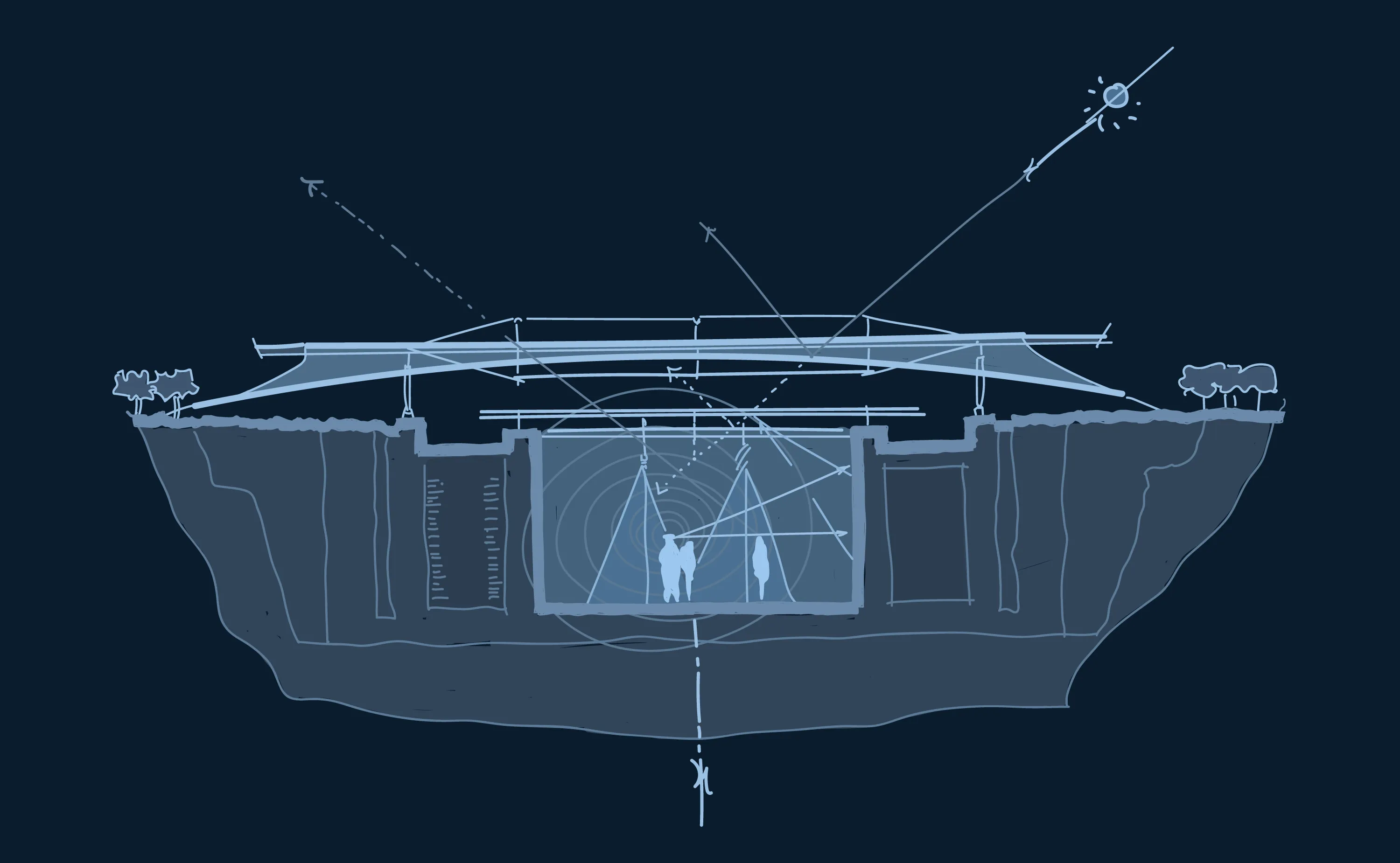
When we observe how architects think through design problems, one of things that becomes clear is how much of designing happens away from computers through drawing and model making. Each architect develops their own ways of thinking and representing ideas. Very little of this important design work ever makes it over to CAD software due to how rigid it is.
Tomorrow’s CAD software needs to be able to support and understand these important modes of thinking, rather than forcing architects to conform to CAD software’s preferred way to think or represent designs.
CAD software needs to support and understand a full range of expressive design visualization from schematic to hyper-photorealistic levels of detail. This is essential for training foundational computer vision models and is essential building block for establishing trust between designers and AI.

Fluency in Design Communication
The design of complex things is an inherently collaborative exercise. Effective communcation around complex spatial information is critical for keeping design and construction projects on schedule. The more complex a design is, the greater the need for clear design communication.
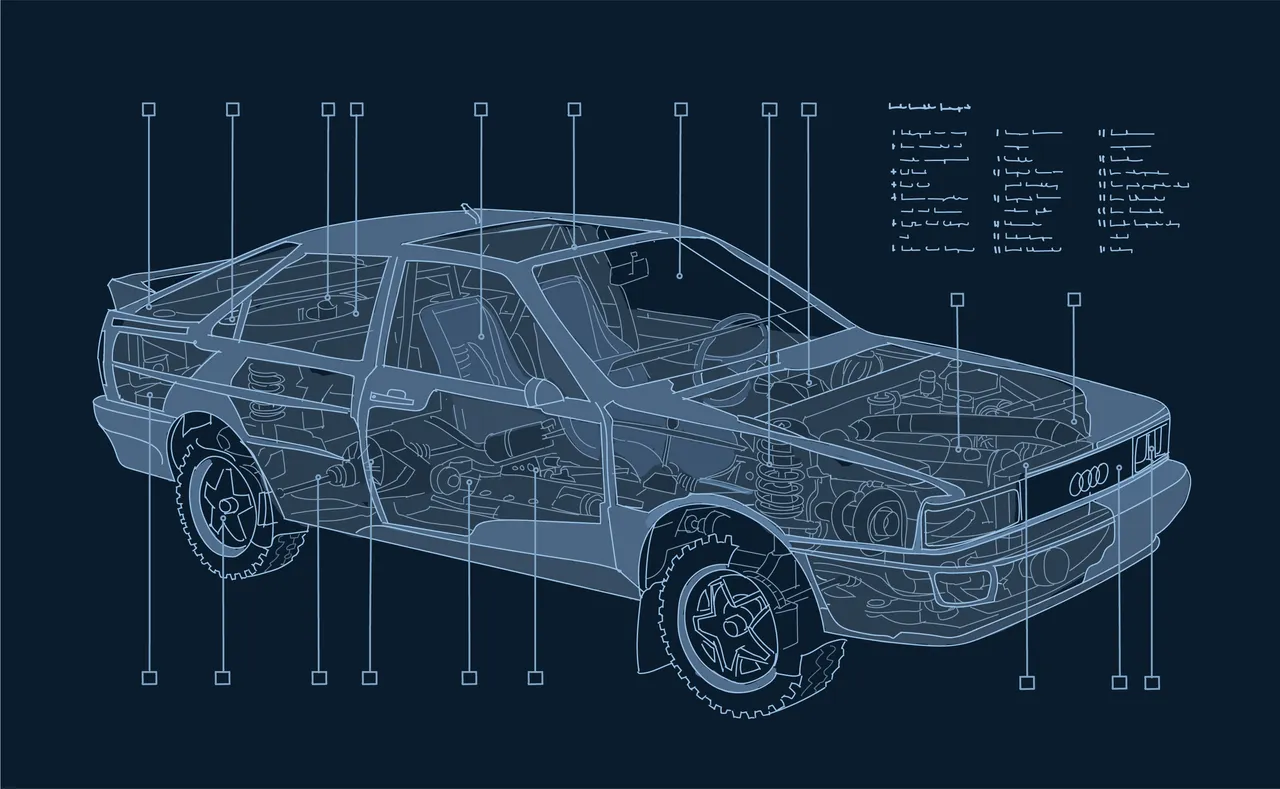
There’s an incredibly rich visual record that CAD software makers can draw upon to display complex designs so that they easy to understand. Computers have the ability to take these things farther. With the use of computers, we can interact with designs, break them apart. animate them, annotate them, dynamically highlight or fade out objects as required. The possibilities are endless and are virtually untapped.
Understanding how a complex thing works and is structured isn’t just helpful for designers looking to sell or explain a design, it’s a critical tool for helping them understand what they are making and why.
Effective design communication will also be one of the vehicles that generative AI systems will need to employ so that designers can effecively converse with design agents. Just as today’s coding models need to be very good at communicating in words, tomorrow’s design agents will need to be very good at communicating in pictures and symbols.

CAD Designs Wherever Work Happens
The shape of today’s CAD software was largely set before wireless networks and mobile computing were invented. Given this, there’s very little accommodation for mobile devices in CAD. This is especially challenging for the construction industry. Construction workers frequently need to consult designs to know what they need to build.
Almost two decades after the iPhone was released, we still do not have cloud-native, mobile native, location-aware CAD. The contortions needed to generate views of CAD designs that can be viewed on mobile devices means that design views are severed from the source data, and lack the full richness of detail contained in the real design. These read-only views preclude people from making changes to designs when they are away from desktop computers.
In order for CAD to get closer to the physical world, it has to break free of the desktop and start operating natively in a dynamic, distributed, real-time, collaborative computing substrate that may be accessed from wherever people are, and on whatever device they are using.
Closing Thoughts
The future CAD building blocks I’ve described above aren’t all that speculative. They’re all things that every CAD software user struggles with. They’re the things that exist in the space between how today’s CAD software allows them to work, and how they want to work.
My sense is that if the CAD software industry skips these essential building blocks, then the generative AI capabilities it produces will struggle to gain traction. Users of CAD software will be much more accepting of AI-enabled capability if the fundamentals have been addressed first.
The good news is creating these building blocks is well within reach. There are amazing examples to draw from out in the wider world. The challenge will be making it a priority to do needed things first.
More Reading

Tactile Thinking
Rediscovering typewriters has made me aware of how the tactile experience shapes thinking. What role might tactility play in the future of CAD?
MAY 9, 2026
Lessons From Pixar's USD
Pixar created an interchange format for organizations to design complex 3D things. What can CAD learn from USD?
APR 19, 2026